

- Home
- Support & Engineering
- Retrofit
Retrofit
Retrofits are specific upgrades to certain parts of a plant without having to replace the entire plant. Retrofits are primarily carried out to replace aging and no-longer-available components with new ones. This increases the plant’s reliability and prevents production downtime.
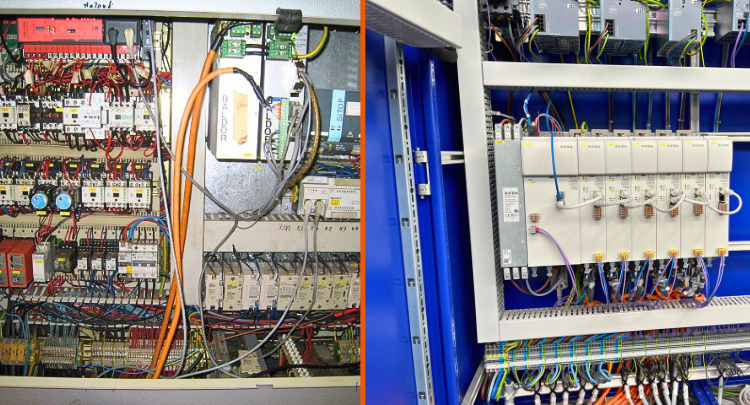
Advantages
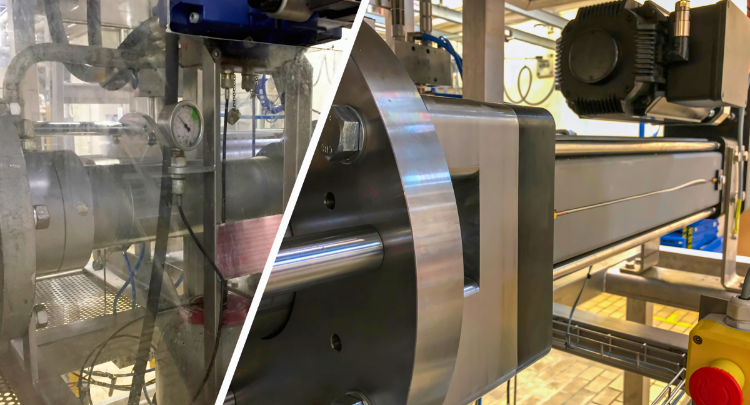
The investment required for a retrofit is significantly lower than for a new purchase, while the system can continue to operate in the long term thanks to the new components. At the same time, the supply of replacement parts is once again sustainably secured. Modern drives also operate more efficiently and consume less energy than older systems, making operation noticeably more sustainable. This applies in particular to the replacement of hydraulics with electromechanical systems, which is one of our core competencies.
It is crucial to make the replacement as identical as possible so that neither the control system nor the existing interfaces need to be modified. If a retrofit is planned proactively and early on, it can be implemented while the machine is still fully operational. This allows the retrofit schedule to remain predictable and helps avoid downtime. Parkem supports the replacement of both its own and third-party products during retrofits.
(Kopie 6)
Typical Implementation
Through direct communication with the customer and on-site visits, the focus is on fully understanding the application and all relevant interfaces. Functions, signals, and relationships with peripheral devices are documented in detail, creating a solid foundation for the retrofit.
During internal planning, the best technically feasible replacement components are identified and compared with the existing system, clearly highlighting similarities and differences. This allows for a realistic assessment of the remaining technical risk. Based on this, the necessary schematic modifications and precise retrofit instructions are developed. Next, the programming of the freely programmable drive controllers is prepared, and all new components undergo a complete functional test in the Parkem laboratory.
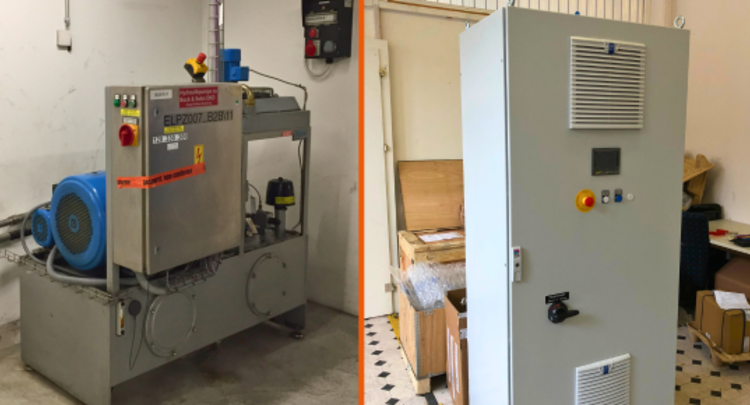
On-Site Implementation
Ideally, the retrofit is performed on a system that is still operational. First, the current state is documented, and the interfaces are prepared in such a way that the system can be restored to its original state at any time if necessary. Next, the new components are installed and commissioned, followed by a comprehensive functional test, including full verification of functionality.
Electromechanical axes—such as belt, spindle, or direct drives—servo motors with or without gearboxes, and modern drive controllers are particularly well-suited for retrofits.